
CFD in OpenFOAM
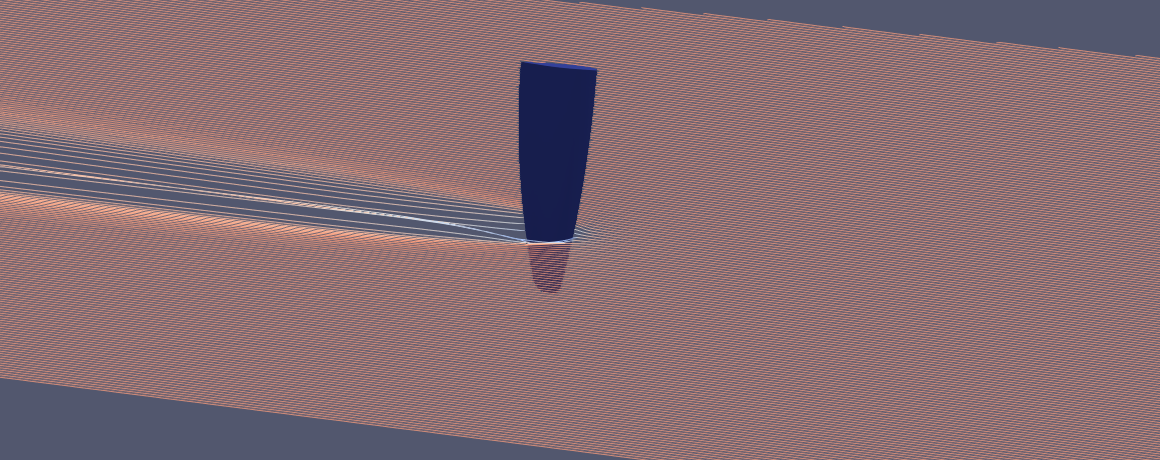
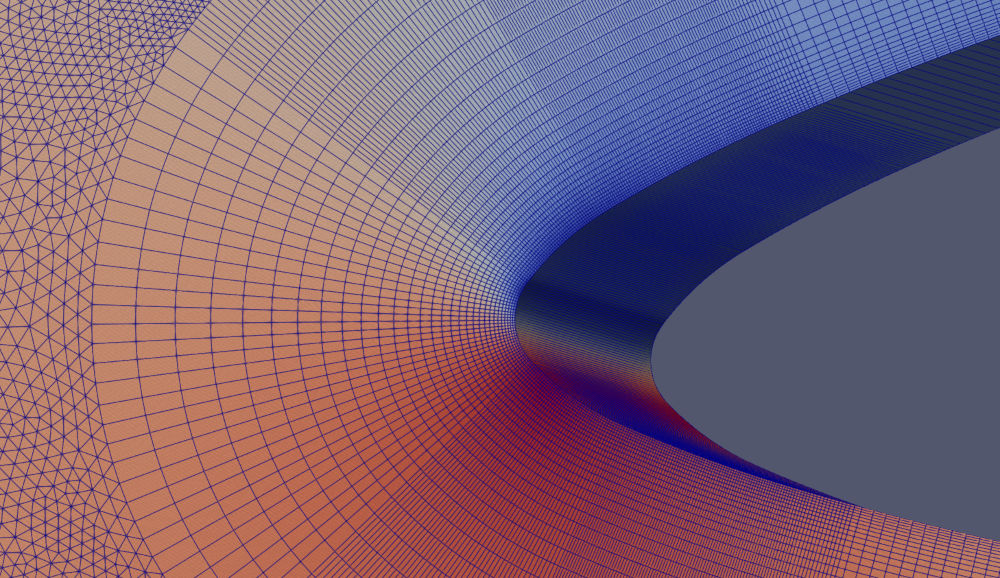
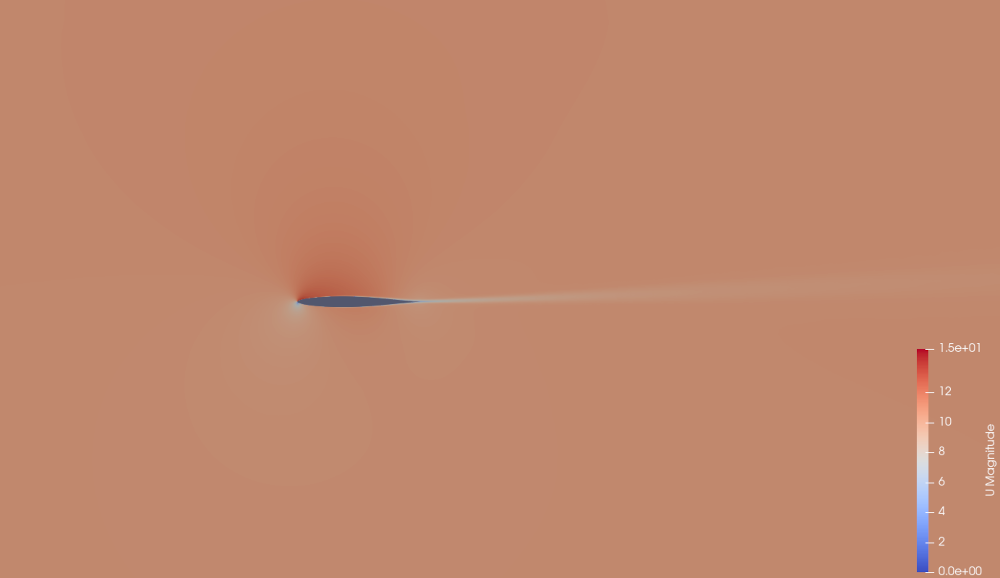
For running computational fluid dynamics (CFD) simulations, we use the leading academic open source CFD software, OpenFOAM. Mastering this software in-house, makes it possible to in-depth study the flow pattern around various fin concepts. For our newly developed slalom fin, the Hammer SL, we have run hundreds of simulations to find the most efficient fin profile and layout. In the simulations we incorporate the SST k-omega turbulence model in a low-RE approach with extremely fine near wall meshing to have the most accurate results.
Elliptical by design
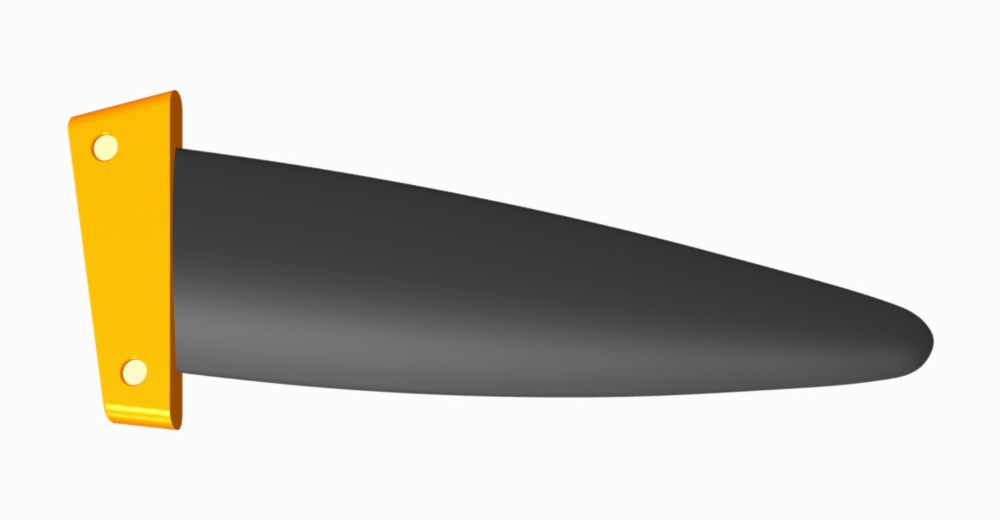
If you have an interest in fluid mechanics, you most likely have heard about the elliptical wing design. The most famous example of this is the RAF’s WW2-fighter Supermarine Spitfire. The theory behind the elliptical planform is that in an incompressible flow, this shape gives the lowest amount of induced drag. For modern aircrafts, this design has some obvious disadvantages, like manufacturing cost and unfortunate low speed stall characteristics. For closed mold manufacturing of windsurfing fins, the cost is basically independent of the shape and with Hammer SL's quite wide layout in its base, once you get going, stalling will never be an issue with this fin.
More nerdy discussion on fluid mechanics and lift and drag of fins
There are four different drag your fin will experience during windsurfing. The three first are called “parasitic” type of drag, as they do not contribute to the lift of your fin. In this context, we do not mean lift of the board out of the water, but the fins lift against windward, similar as the wings on an airplane create lift.
Form drag: This is the dominating drag of the fin. It is caused by water flowing past the fin. Flow separation and pressure differential between the windward and leeward side of the fin, creates this drag. Streamlined profiles reduce this drag, at least at low angles of attack (AoA) between fin and waterflow - as in slalom- or speed windsurfing.
Interference drag: This drag is part of the drag from your board. It occurs where your fin protrudes out of the board. As you are skimming over the chop, the streams of flowing water along the board and the along the fin meet, and their interaction produces additional drag adding to the already existing fin form drag. A flush finhead along the bottom of the board, minimize interference drag.
Skin Friction drag: This is caused by the roughness of the fins surface. However, for this element, there is a delicate balance; Higher roughness on surface, reduces boundary layer separation, which reduces the above form drag, and most likely reduces the risk of spinouts. In other words, some surface roughness on the fin is wanted, however since these are streamlined bodies, used in low AoA, there is no reason to “overdo” the sanding with very coarse grit of your fins.
Induced drag (as mentioned above in “Elliptical by design”): This last type of drag is not classified as a parasitic drag, as you can not have it, unless you have lift. Again, in this context, we do not mean lift of the board out of the water, but the fins lift against windward. When fins (similar as with wings) generate lift, water will flow from the high pressure windward side, down and over the tip of the fin. The resulting flow is creating vortices from the fin tip, and this induced flow produces an additional drag-component for the fin. With the so-called Lifting Line Theory, it is possible to show that an elliptical wing (or fin), has the lowest amount of induced drag compared to all other shapes.